The Petrovich Files are a collection of reactions of Brian Colless to published statements of Douglas Petrovich relating to their differing interpretations of ancient inscriptions from the Bronze Age, particularly those ideas published in two books by Petrovich:
The World's Oldest Alphabet (2016)
Origins of the Hebrews (2021)
The purpose of this dossier is to show that I have informed Petrovich of my discoveries and theories, in the presence of many witnesses, who responded to my postings, in discussion groups on the website ACADEMIA, most recently here (though he does not communicate with me in this long exchange):
https://www.academia.edu/community/LG64g3?c=gA6N4L
I also have a substantial collection of printed-out e-mail messages in which we discussed these matters.
2021.
He has now done video-presentations (2026):
https://youtu.be/P50-hmPpMiw
Identifying the Inventors of the Original Alphabet.
identifies the people behind its invention as the Israelites of the 19th
century BC, specifically Jacob's two grandsons through Joseph:
Ephraim and Manasseh.
https://www.youtube.com/watch?v=8_-IlEMf_SU
Explaining How the Original Alphabet Was Created
My main concern is that he is not taking into account all the evidence that I and others have brought to light, before and after 2016.
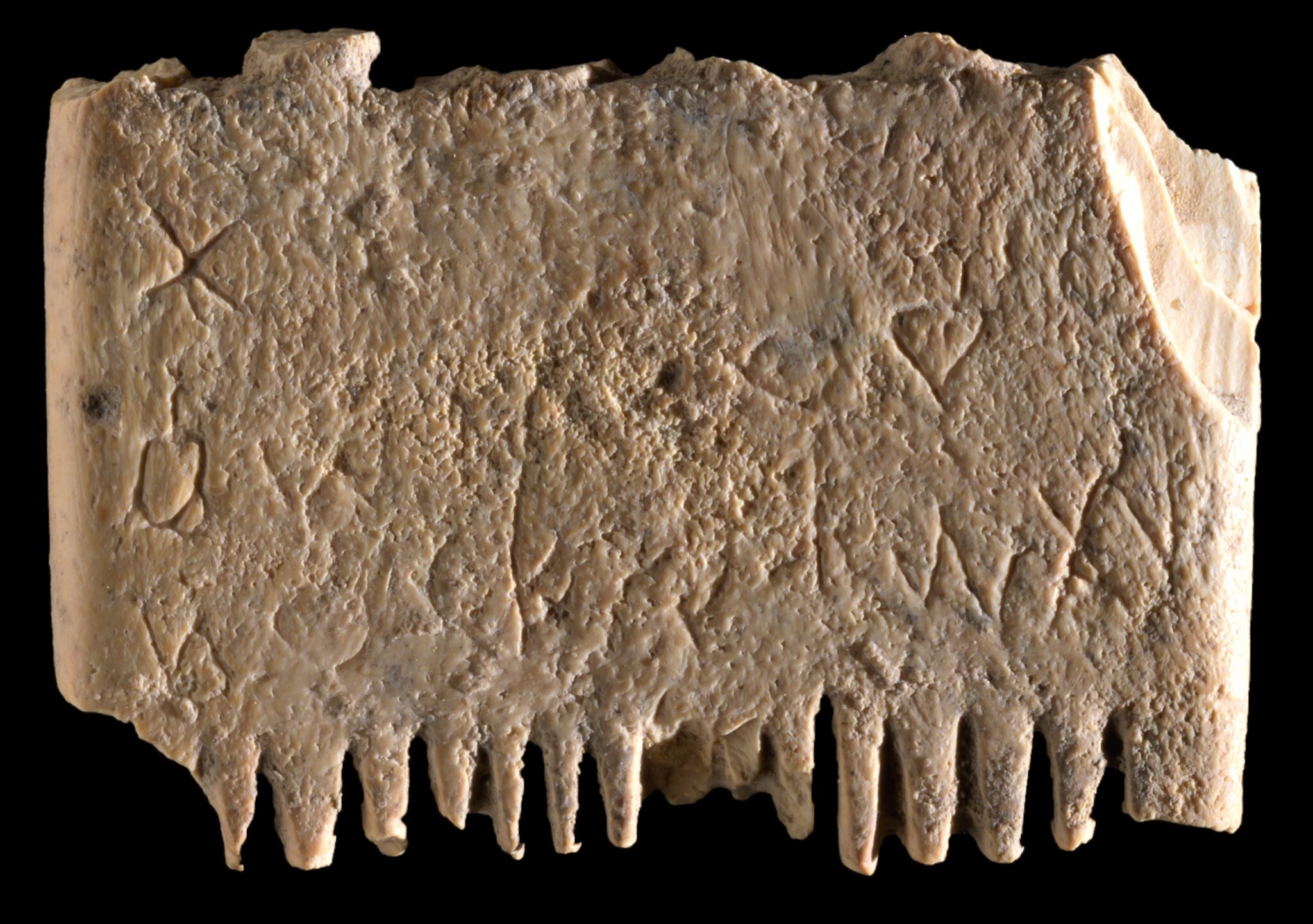
https://cryptcracker.blogspot.com/2021/04/another-lakish-inscription.html
He simply persists in defending his indefensible paradigm, and upholding his untenable interpretations of only one-third of the Sinai protoalphabetic inscriptions. He has had ten years to elucidate the rest of this corpus, and to accept advice.
But his position remains: "Here I stand". "What I have written, I have written". "It's in the book" (and therefore possesses an artificial form of sacrosanctity).
March 2026. The Petrovich paradigm on the "Early Alphabet" is not flawless but floorless, lacking a solid base in factuality.
But firstly I want to talk about Doug's good work on Hebraic inscriptions of the Iron Age,
before he ventured into the Bronze Age and fell flat on his face on the floor of truth.
I have just had a pleasant time studying the work we both did on the Jerusalem jar inscription, alias the Ophel pithos inscription.
This was an achievement for DNP, getting an article published in Palestine Exploration Quarterly,
demonstrating his competence in Biblical archaeology.
My continuous work on the text has been reported serially on my Cryptcracker site (928 visitors so far) and I have been able to make some additions to it.
Viewing the inscription, you will see that the beginning, the ending, and a chunk in between are lacking!
But which end is where the beginning was.
My first attempt chose the left end, and I tried to force a meaning of "cool clear water on it".
Doug quoted my weak interpretation among others, which were equally improbable, and he had the advantage of a discovery made by Gershon Galil, that YN KhLQ in Ugarit documents meant "inferior (because sour) wine", and it could be found on this pithos,
reading from right to left (but reading YYN) . I have accepted this
Apparently this jar contained sour wine and water for the workers on the building operations of the new Davidic dynasty.
You will notice that the table of signs that DNP includes has my name on it, and it is the same one as I have in my essay.
March 2026 (edited, not to say redacted from /LG64g3?c=gA6N4L)The thesis of his two "Hebrew" books should have been that the Proto-alphabet was devised as a simplification of the West Semitic Protosyllabary ("the Byblos script").
That is the hypothesis I adumbrated in 1988 (in my first published article on the subject) and elaborated in 1992.
More recently Doug and I have each promoted the origin of the alphabet as having been produced by the family of Ya`qob Yisra'el in Goshen, during their sojourn in the Nile Delta.
Regarding Epraim and Menashshe and their children: they do indeed appear in Egyptian inscriptions, as does Yosep himself, all of them with various aliases.
Khebeded the brother of the Retyenu Prince is rightly seen to be the "disfavoured" one, with his younger (but senior!) brother. Doug deciphered the Egn passive participle Khebeded, on Sinai 112 and elsewhere; but on Sinai 24a he overlooked the Asiatic Esni , a name which could say (in Proto-Hebraic) "I am disfavoured" (root sn', "hate"). On Sinai 405 an unnamed "Asiatic" is depicted on his donkey (as in 112), again with two young attendants: Api and Shekam. He is assumed to be Khebded, but his name at this point in his life is Sobekhotep. Now, the sons of Menashshe were Makir, Abi`ezer, Asri'el, and Shekem. So, Shekam is Shekem, and Api is Abi`ezer.
Makir might be the water carrier in 112, and Asri'el is the 's (Asi) in four of the Semitic ("Shemic" or "Shemian") inscriptions, and on one Egn incription. On Sinai 376, 'Asi finds himself transformed into his grandmother Asenat. She is in fact found alongside her husband Yosep, known as Montuhotep, "Overser of Granaries" in Egyptian monuments. We would expect Yosep to use the new tool, and Montuhotep left an inscription in the south:
WR GShN PQD ... "Prince of Goshen, Overseer".
https://cryptcracker.blogspot.com/2025/05/israel-in-egypt.html Moshe is not in the Sinai inscriptions, but he and Aharon and Miryam, leaders of the Exodus, are named and depicted on Jabal Maqla in Midian in Arabia (which bears the name HR H.RB in proto-alphabetic script); they are similarly portrayed in Bronze-Age inscriptions and tableaus in America (3000 years before Columbus).
The Patriarchs and Matriarchs in the Makpela Cave of Abraham at Hebron are named and portrayed, I can now reveal; and the names of all the Biblical characters can only be read by applying my paradigm. Do not accept any readings of proto-alphabetic inscriptions (from Sinai and Arabia and the Levant and America)) that have not been interpreted by this table of signs and sound values: https://drive.google.com/file/d/1QATcj_MTlGa5cZzO8sQnzR5lBw8lPTWT/view Obviously Douglas is stuck in 2016 and still promulgating old news, while new astonishing discoveries are being made daily.
I have BA MA BD BD PhD ThD, and I have been grappling with languages and scripts for 90 years (born 1936) and I am constantly on the move.
You can find the links to all the evidence lurking here:
The early evolution of the Alphabet merits a memorable equation/formula:
E = [2M + 2C]2
2021
Shalom, Doug.
I have been waiting patiently for the culmination of your project; at an earlier stage I told you that I was happy (just short of ecstatic) with the way it was going; and here it is in a book (Origins of the Hebrews, 2021), but I will have to pay money out of my old-age pension to know what is inside it. Still, the copious headings you have provided for prospective owners are much appreciated. All I can say is that there are so many books coming out on this subject that the choices are bewildering; but by now somebody must have come up with the right answer, and so, after all the effort you have put into the task, your solution could be the genuine article (actually a monograph, not an article).
[Doug responded by sending me a copy, and "affectionately" expresing his thanks for my assistance.] One book on the subject (published in Vermont) recently came my way from my local bookseller (in Palmerston North, NZ) for NZ$18; it has lots of interesting information from archaeology, but it supports the 13th-century Exodus, rather than the 15th C. Allow me to set that aside for another day in the nine that are left for comment.
If we set up one of these chat-rooms, the participants will want to talk about other matters; and you have opened the way for this by not giving us a selection of pertinent details that could be discussed, and also announcing your exegesis blog (white on black is scary to my eyes, though) with your Nimrod = Sargon proposal (which I also campaign for, and I would like to compare notes with you in this forum, or bazaar); and there is something else here on your Academia page that I have been impatiently waiting for, namely your essay on dating Khirbet Qeiyafa. This really got me excited last week as I redd (sic! "read" would be confusing) it on my screen, and next day I deemed it worthy to be printed out on precious paper, so that I could read, mark (in yellow and red), and assimilate its information and insights, which largely correspond to my own thoughts (but you have made me change my mind on one thing) in my work in progress on the same subject.
You have published this in JSEOT. It is good to read an Evangelical composition like this, which takes Scriptural evidence as valid.
In my long-held opinion, the accusation that the things we are liable to read in the Bible are not necessarily so, is a non-viable libel. (Sorry, George and Ira Gershwin)
The name Sha`arayim ("Two Gates") could only apply to Qeiyafa when its two gates were functioning, and this is recognized to be a very short period between its creation and its destruction (which would probably be at the time of the disastrous Battle of Gilboa, when the Philistian hordes wreaked havoc in Israel). The name applied to the site earlier (or later) could well have been Gob; so this is a case of "both-and". But Petrovich has noted that the list of towns "in the lowland" including Sha`arayim (Joshua 15:33-36) gives a total of 14, but there are 15 names. One explanation could be that Sha`arayim was added later (in the time of Samuel, perhaps, or after the census of King David); in this case its older name could still be there; it is preceded by Socoh and Azekah, which are both identified archaeologically, and they appear in the Elah Valley narrative (1 Sam 17:1), with the Philistians camped between them, and thus opposite Qeiyafa. The toponyms listed after Sha`arayim are Adithayim, Gederah, Gederothayim. Of these, Adithayim might be an alternative name for Sha`arayim.
A complication unknown to me until I saw Petrovich's footnote 44 (where C. C. McKinny's dissertation is cited) is that Sha`arayim could be identified as nearby Tell esh-Shari`ah. Garfinkel should have looked into this site, too! The place that I know by this Arabic name is much further south, and has been identified (Garsiel and Garsiel) as David's Ziklag (S.iqlag); we all know these days what shari`ah means, and David laid down a law about booty there (1 Sam 30:24-25); David is a h.alif in Islamic tradition, hence the name of the nearby Tell H.alif. Garfinkel wants Tell er-Ra`i (the name refers to shepherds) to be Ziklag, but it is too close to Gath, critics say. Never mind, its importance is the discovery there of three potsherds bearing the name Yerubba`al, alias Gid`on, a famous Judge of Israel. If you would like to see how the three pieces fit together, to produce la-ya-ru-bba-`a-la gi-di-`u-n (with the ba syllabogram containing a doubling dot, a sort of Daghesh Forte, a subject that Douglas and I have looked at together):
https://cryptcracker.blogspot.com/2021/09/khirbet-ar-rai-inscription-lyrbl.html
This northern Tell esh-Shari`ah is troublesome. It is not on any of the maps I have (notably Rainey's Sacred Bridge, but it is listed in Student Map Manual as 752 Khirbet esh-Shari`ah, tentatively identified as Shaaraim). Petrovich has it "in close proximity" to Khirbet Qeiyafa, after having said that no other option was available in proximity. Perhaps it could be accepted as a village associated with Sha`arayim("fourteen cities with their villages"(Jos 15:36); Qeiyafa does not seem to have any dwellings among Garfinkel's excavated "houses"; it was a military base and would have lodged the men in tents, within and beyond the walls; it was also a centre for collection and storage of produce; and it was, I ween, the religious centre for King Saul's kingdom, after the priests of Nob had been slaughtered, and Saul had broken with Samuel and Yahweh.
The big surprise for me in Petrovich's article (97-98) is Ada Yardeni's suggested reading of the restored pot-inscription from C11 as "Ishba`al ben BD`[ShTRT]", meaning "son of 'Servant of Astarte'", referring to King Saul and his devotion to the goddess. I had already thought that King Saul had adopted this form of apostasy, given that worship of Baal and `Ashtart (Ashtoreth) was endemic in that period (Judges 2:13; 1 Sam 7:4, 12:10), and the armour of Saul was placed in a temple of `Ashtart (1 S 31:10); the shrine C10 at Qeiyafa was probably for a goddess, I would think; and Baal is represented by standing pillars, in buildings C3 and D1, and in a chamber of the South Gate. Ishbaal had a Yahweh name originally, YShYW (Yeshyahu? "YHWH is") (1 S 14:49). Garfinkel has stated that the name of the king who built Qeiyafa would have to be mentioned in an inscription to confirm this. Well, I can see that three kings are named on the ostracon and the jar: Dawid (with GLYT, Yahu, and Elohim) in the prophetic oracle on the ostracon, and Ishbaal, and Saul as "Servant of `Ashtart", on the jar. Saul was the reigning King, Prince Ishbaal was the governor of Shaaraim (resident in the central palace, not in building C11, where his jar was found), and David was the anointed "servant of Elohim" (Ostracon lines 1 and 2), who was destined to be King of Israel (line 4).
The either-or mistake in this situation is based on Garfinkel's insistence that this fortress belongs to David as King of Judah in the Iron IIa period, and he attempts to exclude Iron Ib from the picture, and he barely mentions Saul in his manifold discussions of the evidence. Iron Ib is clearly represented at the site, as is IIa; I suggest the latter evidence shows that King Saul was importing foreign luxury goods late in his reign, along with the "foreign gods" (1 S 7:3) including Ashtart of Sidon (1 Kings 11:5, Solomon's apostasy). Doug has cleared up this matter.
https://sites.google.com/view/qeiyafaassaarayim/home
9/12/2021 One thought I want to add to this heap of knowledge is still on the theme that there is more than one answer to a question. You might know that I have an obsession (leaning towards cognizance rather than craziness) with the origin of the alphabet. Most theories on this subject relate the proto-alphabet to the Egyptian hieroglyphic system, and rightly so; it is clear that wherever possible the original alphabet borrowed hieroglyphs, and the clearest sign (showing that the inventors understood the characters they borrowed, pace Orly Goldwasser, who thinks they were ignorant) is the nfr hieroglyph, meaning "good and beautiful" (o-+), which was related by Western Semites to their corresponding word t.ab ("good"), to represent the consonant /t./ T.et; and you will find this on the Petrovich table of proto-consonantal signs. But this West Semitic consonantal script (the proto-alphabet) had a predecessor, which was actually its progenitor, since most of its letters were already in this West Semitic syllabic script. Thus, the nfr hieroglyph was employed there (already applying the acrophonic principle) for the syllable T.A, again derived from t.ab ("good"). All other alphabet theories are lopsided, and limping on one leg. This is not a personal whim, but the fact of the matter. (Please pardon my arrogant version of "in my humble opinion".)
One current theory (let those who read understand) has the Israelian Hebrews in Egypt inventing the proto-consonatal script, that is, the proto-alphabet. Certainly this is a hypothesis that deserves to be explored (though it is surprising that the Bible does not record this idea or fact).
Like all the other theories, this one also needs to take account of the knowledge we now have of both these West Semitic writing systems (proto-syllabary and proto-consonantary) operating in tandem, all around the Fertile Crescent and across the Atlantic Ocean, in the Bronze Age, 3,000 years before Columbus. West Semitic inscriptions are found in connection with a silver mine in Norway, a gold mine in Texas, copper mines in Michigan, gold mines in Puerto Rico.
If we want to involve the children of Israel in all this, we could invoke the tribe of Dan and their ships, and Asher on the coast (Judges 5:17).
https://cryptcracker.blogspot.com/2019/10/phoenicians-in-puerto-rico.html
https://sites.google.com/site/collesseum/huron-stone
9/12/2021
I see that Doug has extended the time for this discussion, so my feeling of urgency can calm down. More scholars may have obtained the book in the next few weeks, and thus its contents can be discussed more reasonably.
Much (indeed most) of my published work in this area of early inscriptions (in respectable journals and in websites) has been ignored for many years. I am therefore taking this opportunity to report my findings in this forum, since Doug can muster bigger crowds of hearers than I can; however, those scholars who see themselves as the experts in this field of Northwest Semitic palaeography and epigraphy, will be scrupulously avoiding this exchange of ideas, and so the culpable visually impaired will go on deceitfully leading those whose eyes are dim and their vision restricted through no fault of their own. This sounds like a big conspiracy
Looking again at the Petrovich theory of the invention of the consonantal proto-alphabet in Egypt by the ancestors of the children of Israel who eventually left Egypt and settled in their Promised Land: I am asking some questions, and also giving some answers.
14/12/21
Seventeen days left to comment, with a circle of 211 participants, and no need to be wearing a protective face mask in front of a computer screen, and formal dress is not required. As Doug's books reach more hands and eyes, this place can become less of a book bazaar with customers bargaining over the price, and more of a forum for discussion of relevant details. I read /riid/ the table of contents regularly, as a useful synopsis, but I have not read /redd/ the book itself yet. However, I could at least say something about the cover of Volume 2 (which I have not seen, but no matter): we are told that it depicts Yosep (Joseph) as Vizier (and that is right, is it, that he did hold that office?), and Moshe (Moses) as leader of the Exodus (no doubt about that, right?).
If the Hebrews (specifically "the children of Yisra'el") were so interested in writing systems, and actually invented the proto-consonantary, the first alphabet, for their own language (the Petrovich hypothesis, which I do not deny and can not falsify) then they must have been employing a script before their proto-alphabet was available. What could it have been? At this point the exponents of all varieties of ABT origins put on their blindfolds, and say "I see nothing". I am left standing alone pointing to the West Semitic Proto-syllabary (forgive me, those of you who support this idea, but are powerless to admit it). This writing system apparently goes back to the time of the Egyptian Old Kingdom, as its signs show influences from the hieratic (cursive) characters, more than the monumental hieroglyphs (pictorial). Its inventors had the idea of making a compromise between the Egyptian and Mesopotamian scripts. It borrowed most of its signs from Egypt, and from Mesopotamia it took the idea of syllabic writing. This Semitic script was functioning for hundreds of years, actually at least a thousand, and at its middle point on its timeline it was joined by the WS Proto-consonantary, which borrowed a majority of its signs from the Proto-syllabary (usually the -a syllabograms). As far as the evidence goes (and it grows in size constantly) the syllabary covered 22 consonants; accordingly, we would expect the same situation to apply in the Proto-consonantary, and in 1988, in my first published article on the subject, I stated that I could only find that number. However, the flaw in my presentation was that I was including two signs that proved the proto-alphabet to be longer than that: eventually I realized that ooo< (Hayt. hank) was H, and = (eyebrow) was not Zayp but Dayp. These were two letters that were not in the syllabary. I can castigate my 1988 self vociferously and reproachfully
I am now offering my updated version of this:
https://cryptcracker.blogspot.com/2015/11/h-l-h-m-order-of-alphabet-letters.html
This little tablet from Thebes (15th Century BCE) offers the beginnings of two orderings of the short proto-alphabet, I propose.
Also from Thebes are a set of tablets with proto-consonantal abgadaries (and a proto-syllabic text) which present the letters of the original long version.
https://cryptcracker.blogspot.com/2007/10/gordon-hamiltons-early-alphabet-thesis.html
This fits my model of the early history of West Semitic scripts in the Bronze Age:
Proto-syllabary (22 consonants) > Proto-consonantary (more than 22) > Neo-consonantary (22) > Neo-syllabary (22).
I will attempt to justify this thesis on another of our allotted days.
A question, elegant and eloquent in its rhetoric, relating to the situation I outlined at the outset: If Joseph and his family were involved in the origin of the alphabet (either inventing it or simply adopting it), and if Moses was learned in all the lore of the Egyptians, and was a ready scribe who knew all the varieties of West Semitic scripts, could he have bequeathed the Neo-syllabary to Israel, to take with them into their new world? Does anyone have an answer o this hypothetical question? I will try.
9/12/2021
From cryptcracker - "but this could represent human breasts (thad or shad), and therefore stand for the sound Th (as in thing)".
I haven't been able to take this suggestion seriously, because the value of the Shin is 3, (and thus I keep thinking of the triple-breasted whore of Eroticon Six). :DOK, accordingly, in these circumstances I will give you three (unsolicited, but not as in soliciting, that is, accosting for a cost) answers to your concealed question, not one.
(1) Your classical allusion escaped me at first, but I now see you are referring to Eccentrica Gallumbits, and Douglas Adams (who is now hitchhiking through the entire universe, and beyond, no doubt); I think this phenomenon does occur in humans sometimes. No intended allusion to Ephesian Artemis/Diana, I presume (her pendulous adjuncts are a mystery to me, anyway).
(2) Perhaps you are hinting at your magic numbers; whether you are or not, I will say that if the exponents of gematria came along at the Shin = tooth stage, they would have no idea of the thad/shad origin of the letter as \/\/ breast; I think Doug and I are the only ones who accept this; will you not make it three? Incidentally, another sign in the Proto-syllabary was 'I from 'iratu (single) breast, but the 'alpu "ox" (`A > `alep) won the glottal stop position in the alphabet. If there are three or more peaks in the sign /\/\/\ it is water and Mem.
(3) Back to the Proto-consonantary (a term that Doug and I both employ, I think) and its progenitor the Proto-syllabary (which is unmentionable in Academia, because it has been placed under a tapu (taboo), or a h.erem ban, or the curse of ostracism); but I talk about it all the time, since it is essential to any theory of the origin of the alphabet, and yet is everywhere missing in action. That system did not distinguish Sh from Th; and so SHA was Shad (not Thad), and SHI was shimsh (sun); but both found a place in the proto-alphabet, with Thad as Th and Shimsh as Sh; in the subsequent Neo-consonantary (a shortened alphabet of 22 signs) the \/\/ character became the letter covering three (!) sounds: Th, Shin, Sin. In the proto-alphabetic inscriptions, the Thad consonantogram is not easy to identify, wondrous to tell; but I can spot it; in the Wadi el-Hol horizontal text, for example.
https://cryptcracker.blogspot.com/2009/12/wadi-el-hol-proto-alphabetic.html
Here, everybody takes the vertical-stance \/\/ as M, but it is actually \/\/ Th; naturally, the true M occurs three times (with three or more peaks, according to the prescription I have just formulated). The Sun-sign O_o (sun disc and serpent) is in the vertical text, twice; some read it as K, thus leaving the whole text without a single sibilant (that is all right if the language is Maori, but not Semitic). In the Sinai corpus, I can only see the Th-sign, once (in this stance /\/\), in Sinai inscription 375, where it occurs twice (twice + once = thrice?!) with L between the two instances, making a total of ThLTh 3 (later Hebrew and Phoenician ShLSh). The story, with its connections with the Bible, is told here:
https://cryptcracker.blogspot.com/2007/08/sinai-food-rations-sinai-inscriptions.html
"Rations (`RKhT, as in 2 Kings 25:30): out of (MG, min-go) the granary ('ST) three (ThLThT) handfuls (S.BTM, as in Ruth 2:16), and garden-pickings (MS`T GN)"
Bethsheba, Iif you and I are not careful we could land ourselves in deep mire, and be told to dry up. I admire your creative artistry, and it could well be that the great Mind of the Universe inserted those wondrous things into the system, for you to discover; but the starting point is with the brains of the human inventors of the West Semitic writing systems in the Bronze Age: they created the Proto-syllabary (a REbus syllabary, only the first syllable of the pictured word is operative, except when the picture is functioning as a whole word, a logogram) and its offshoot the Proto-consonantary (a Rebus consonantary, only the initial consonant is sounded, but it can also act as a logogram). Those wise scholars took what was available from previous writing systems, and remoulded the pieces for use with their own language.
Stop me if you have heard this one before (or let it sink in more deeply into your consciousness): there is ample evidence that both systems were taken over lands and seas in the Bronze Age, all around the Fertile Crescent, and to the New World, which was then much newer than when Columbus and Cortes collided with it. Both of these closely related systems are represented in West Semitic inscriptions from the Nile Delta region, which I have published, but they may have been overlooked in Douglas's two books. The question that they will need to be asked is: Are you in Hebrew? (I will leave this matter for another time, but it seems analogous to asking Latin inscriptions whether they are in French, even though French, and Italian, are descendants of Latin. Languages change, though if I ruled the world I would not let them.
My Rabbinic teacher at Sydney University showed us some numerical meanings of characters in Genesis; he had been a mathematician in Germany, and he escaped; but the question is whether the writer of the narrative had deliberately put these tricks and treats into the alphabetic text. It is possible that some of these writings have been through a succession of script-systems: the Proto-syllabary, which begat the Proto-consonantary, which like our own intimate viruses, went through a series of mutations, but it engendered a third (Count 'em!) category, the Neo-syllabary, used only in the time of the Judges; and then it made way for the Phoenician international consonantal alphabet. Of course, nobody knows about the Neo-syllabary, because she was only rediscovered in the 3rd (yes!) millennium of this currebt era (CE); it is hard being the chosen one all the time, but she sat herself in my lap, and demanded to know what I was going to do about it. I will not say she is triple-breasted. On reflection, I realize that she does have three breasts: three forms of the breast sign (\/\/ Shad, Shin); each has its own peculiar shape and stance (for shu, sha, shi), and this principle applies generally in her system. The difference with the Proto-syllabary, the great grandmother, is that she had a different picture-sign for every syllabogram.
Returning to the numbers game, there is a known case of deliberate playing with numerals in a scripture, namely the Apocalypse, and its three sixes (666); I am not making this up, you understand. Recently I was reading again about Nero's Domus Aurea, and I remembered my idea that the New Golden Jerusalem was its Christian counterpart and rival (I must publish that sometime, but you can run with it, if you like.). The numerical value of his name (NRWN QSR) is 666. The same applies to King Louis XIV (LVDOVICVS, add them up) who persecuted the saints, and set himself up as a sun-god, and went about saying "The State? That's Me.").
https://cryptcracker.blogspot.com/2011/09/666-and-all-that.html
It has occurred to me that the followers of one of the 3 (sic!) Abraham religions (as also millions of Hindu Indians) envision God as three in one (1G = 1 x 1 x 1). So if 3 is their favourite number, we should not be surprised to encounter it everywhere. The whole Universe is a tripartite system: Creator (father/mother), Matter (son), Spirit (gas).
28 December 2021
Three days left to comment and I have at least three more things to comment on. One of my Bible and Syriac teachers (Alan Cole) laid down the statute: "With every new book that you read, also read two old ones". I will be reading a very new book soon on the subject of Israel in Egypt (Haendel has an oratorio with that title, and I have sung in it),
We are into triads again, and a recent book I have mentioned in this forum is the third in a trilogy: Ahmed Osman, The Lost City of the Exodus (2014). He identifies Joseph as Yuya (supposedly Semitic), a minister of Amenhotep III; I could play games with that name, so that YU is for YUSUF and YA is for his father YA`QOB. The lost city is Tell Haboua (presumed to be Zarw), and Ramesses I (not II) was the Pharaoh of the Exodus, and that was Pi-Ramesse; and Moses WAS Akhenaten (!). At least he information about Zarw is useful.
(2) H. H. Rowley, From Joseph to Joshua (Schweich Lectures 1948) examines all the theories, and reaches his own synthesis, with a double entry into the land, at different times, starting with the Habiru of Akhenaten's reign; as a postscript he reports the midrashic idea of Exodus Rabba 20:10, whereby Ephrain mistakenly departed 30 years too early.
(3) John Arthur Thompson (my Hebrew, Aramaic, Akkadian, and Biblical Archaeology teacher), The Bible and Archaeology (1962): Joseph was in the Hyksos Period; Moses led them out c. 1280 BCE, early in the reign of Ramesses II.
Apparently these three authors all made wrong choices.
29 December 2021
Right now (in response to people who can not grasp it, as you Dennis Skalden seem
to have done) I am writing a little essay, using English language as the
basis, for the invention of a new script. going through the stages you
have mentioned. English spelling/orthography is entirely logographic
(choose, chose, loose, lose), so we can use all its written words as
(non-pictorial) logograms in my game. The REBUS principle is applied at
each stage: REBUS (picto-logogram > rebogram/morphogram), REbus
(pictogram > acrophonic syllabogram), Rebus (pictogram >
acrophonic consonantogram)l but the logograms and morphograms remain at
the two later stages, till the Phoenician and Grecian alphabets become
the standard.
[1] Egyptian writing was complicated
but we can read it. The hieroglyphs influenced West Semitic writing at
both stages. In Gubla/Byblos the Western Semites admired it from afar,
and they borrowed a selection of its signs for the characters in their
own new script, but they wanted them for a simplified syllabary, using
the acrophonic principle, as a modification of the rebus principle
(REbus). But their consonantary was devised in Egypt, it now appears,
and they could see the hieroglyphic consonantal system close up, and
adjust their syllabary accordingly. That is what they did; the
logoconsonantary was a simplification of their existing system under the
influence of the Egyptian style; and they updated the pictographs (many
of which had started as Egyptian Old Kingdom cursive signs). My grand unified theory of the origins of the alphabet needs to be presented simply, as a Christmas present, perhaps. Let us approach this problem (that is, the problem of not understanding what I am talking about) by inventing a writing system for English, since the peculiar way that particular language uses the alphabet is monstrous, atrocious, abominable.
Speakers of English are cripples in regard to their knowledge of phonetics. They do not realize that every word in their spelling system is a logogram, and each one of them has to be learned individually (how to say it when you see it, and how to write it when you hear it). A logogram is a "word sign"; it could be a picture of what the word represents, or a conglomeration of alphabet letters, like "knowledge". Try sounding that logogram out, letter by letter, starting with the sound /k/ and ending with d g (not j) e, and you will end up with nothing like "nolij", but that is what it is supposed to say. Today I saw "fowl" misprinted as "foul"; they are different words, but they are the same in sound (homophonic), though they should both be written /faul/; and "cow" and "cowl" should be cau and caul; "soul"is sounded differently from "foul", and it is correct, but you still need someone to tell you how to pronounce it; but "maul" and "Paul" (and "pall") should be /mool/ and /pool/; while "pool" ought (oot!) 2B (testing! texting!) puul; "peel" and "peal" are really /piil/; pill is pil, and pull is pul, and put is put (right!), but but is bat, and bat is baet, and bait is beit (or baeit), and beet is biit, and bite is bait, and fight is fait.
Never mind (make that /maind/, if you don't mind).
Here we go, then, taking modern international English (that is my language, though I also have an Australian dialect lurking beneath it) through the stages of the development of the alphabet.
Suppose we want to represent a cat sitting on a log. We can draw a picture of it.
If we are moving towards making a writing system, we can call the image of each object (the cat and the log) a "pictograph" or a "pictogram", and go even further and define them as "logographs" or "logograms", symbolizing the word for "cat" and "log" in any language. This is very useful, and we can compile an enormous collection of pictorial symbols for objects in our own culture and environment, but still be unable to reproduce exactly a sentence such as: "The cat goes (or went) to a log and sits (or sat) on it". We can represent "go" by two striding legs, for example, and that would be an "ideogram", denoting the idea of movement; but how are we going to write all the words of the Queen's Christmas message with only images and symbols?!
The next step is to invite Uncle Rebus to help us out, with his REBUS principle. This solution was utilized, in ancient Mesopotamia (Iraq) and Egypt (also China, but we will stay in West Asia and North Africa, where the alphabet was invented). The word REBUS is Latin (5th declension, ablative case, plural) of the word res, "thing"; its singular ablative form is re, as in re: "in the matter of, concerning"; rebus denotes "by means of things", with particular reference to representing words (including personal names) with pictures to give the sounds of its parts. Thus, "beanstalk" could have a bean pictured with a stork, and this shows that the rebus writing system uses words as "rebograms" or "morphograms", giving up their own meaning to provide their sounds to other words that have the same sounds (or similar); the "stork" picto-logogram (pictogram acting as a logogram) can also stand for the noun "stalk" and the verb "stalk"(since the -r- and -l- are not pronounced any more, in standard English); and the "bean" picto-logogram can likewise function as a "rebus morphogram" or "rebogram", lending its sounds to another "form" (Greek morph), namely the verb "been".
Practising "rebus writing" we can now quote Shakespeare, by drawing this set of pictograms and symbols: 2 BEE OAR KNOT 2 BEE. The three words "be, or, not" are written with picto-logograms functioning as rebo-morphograms, and "to" has 2 (an ideogram for duality) as its rebogram. Incidentally, English "to, too, two" are now all pronounced the same way, but none of them tells us to say tuu, and so they have to be classified as "unphonetic" logograms.
That was easy, using picture language to record speech in a form of writing; but how do we go on to finish the quotation: "that is the question"? Indiid, dhaet iz dha cwestyen, dhaet iz dha thing. Notice my dh- for th- in "dhaet" and "dha" but not in "thing" (which is phonetically correct spelling, but you still have to learn how to say it and write it). Some speakers of English show us this distinction by saying "dis ting". When we construct our ideal script, it will need to distinguish unvoiced consonants (p k s sh t th) from their voiced counterparts (b g z zh d dh), which add vibrations of the voice in the throat to the sounds being made in the mouth, and add to the total of sounds available for constructing words. In Polynesia, where I live, consonants are not voiced (except m n ng), and this limits the possibilities.
Moving on to our next stage, we have an extension of the rebus principle. If we want to put the idea of "good food" (actually gud fuud) into writing, we could comfortably find a logogram for the noun food, but not for the adjective good.
Milk Bowl Inscription
14/3/2022
A few folks in this forum will be expecting me to comment on the new inscription from ancient Lakish (now commonly known as Lachish, but not to its inhabitants in the Bronze Age). Two interpretations of the text have been published: first by Misgav (in Antiquity) and now by Petrovich (in Bible and Spade); both of these examinations find the root 'BD ("serve"), possibly as the noun 'BD ("servant" or "officer"), and a noun NPT ("honey"); this produces a felicitous concurrence of "milk and honey"(as in "a land flowing in ..."). Consequently the person who is mentioned in the text is a bee-keeper, though no name is given, which is strange if this is an identity document, such as a calling-card, and it has been suggested that it belonged to an Israelian invader, since only the children of Israel used the proto-alphabet in the Bronze Age, because they invented it. I am glad Douglas has made this article readily available I myself have previously inspected the inscription, trying various possibilities for its decipherment, and I will take the opportunity to share my findings with this multitude of thinkers here gathered amidst the distraction of the destruction of cities, by invaders who think they have the right to take over the land on which they are trespassing; but there is a faint connection.
It is not widely known, but as far as I am aware there is only one person who is qualified by long and wide experience to read Bronze Age West Semitic inscriptions (with the proviso that the only person who really knew the intended meaning of an inscription was its author, who composed and recorded it). Here you are liable to fall down and roll around laughing, so you should ensure that you will be enabled to stand up again, when I say: in my humble opinion that percipient person is my miserable self. The two published attempts at reading this ostracon failed to ask the question: Is the inscription consonantal or syllabic? The four possibilities in a new paradigm are: Proto-syllabic, Proto-consonantal, Neo-consonantal, Neo-syllabic. Practitioners of West Semitic epigraphy must be competent in all four of these categories to succeed.
At this point I will merely state that my preferred reading of the inscription identifies two words, each with an indication of the scribe to show where it begins. The first word is a verb, and the second word is its object, a common noun.
However, I must first express my appreciation and admiration to Doug Petrovich for his book on the Sojourn and Exodus of ancient Israel, as represented in the archaeological and historical records of Egypt. This monograph (Origin of the Hebrews) has been engrossing me throughout this year, and here would be a good place to respond (favourably) to it, in subsequent postings.




No comments:
Post a Comment